Coat of Arms Signet Rings: Heraldry Symbols Explained
Coat of Arms Signet Rings and Why They Matter
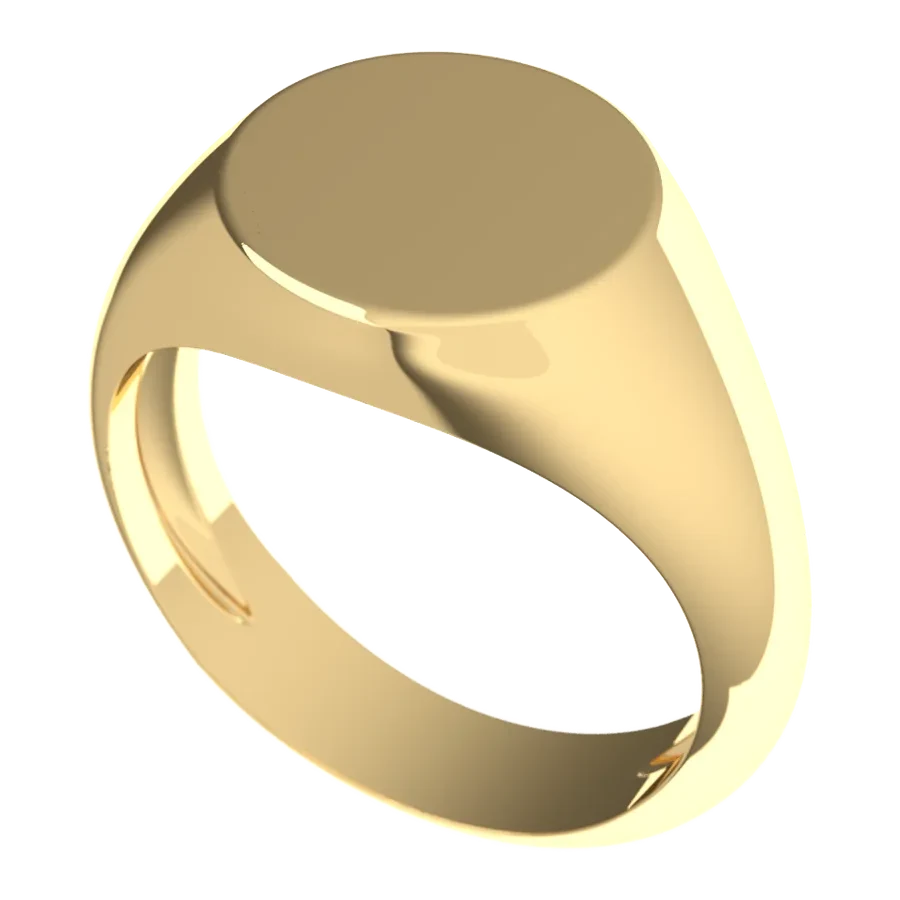
A signet ring is a ring with a flat face that carries a personal mark. Historically that mark was pressed into wax or clay to seal a document, which made the ring a kind of signature you could wear. Signet rings go back thousands of years, and heraldry became part of the picture in medieval Europe, when families and individuals began to use arms as identifying marks.
A coat of arms signet ring is simply that old idea in its most traditional form: your arms, or part of them, cut into the face of a gold ring. It matters because it's one of the few pieces of jewelry that says something specific. A plain band says "married." A monogram says "this is mine." A coat of arms says "this is where I come from," and it says it in a visual language that's been refined over roughly nine centuries.
That language is worth learning before you commission anything. If you don't know what you're looking at, you can't tell whether the engraving will survive being shrunk to the size of a fingernail.
The parts of a coat of arms
People say "family crest" for the whole thing, but in strict heraldry the crest is only the figure that sits on top of the helmet. A full coat of arms can include:
- The shield (escutcheon): the core of the arms, and the part most often engraved on a ring.
- The helm and mantling: the helmet and the decorative cloth flowing from it.
- The crest: the figure on top, such as an animal, a bird or an arm holding something.
- The motto: a short phrase, often in Latin, on a scroll.
- Supporters: figures standing on either side of the shield. These are rare and usually reserved for grander arms.
On a ring face you almost never fit all of it. Pick the shield, the crest, or the shield with a simplified crest above it.
Reading the symbols
Heraldic descriptions are written in a formal wording called blazon. You don't need to speak it fluently, but three ideas help.
Tinctures. Heraldic colors have their own names: gules (red), azure (blue), vert (green), sable (black), purpure (purple), plus the metals or (gold) and argent (silver). The tincture rules say a metal shouldn't sit on a metal, or a color on a color. Engravers have long used hatching patterns to show tinctures in black and white, and the same idea works on a gold ring face.
Charges. A charge is any figure on the shield: a lion, an eagle, a tower, a star, a sheaf of wheat. Many of these are puns on a surname or nods to a trade or a place, so they're worth checking against your family's own records rather than a generic chart.
Divisions. Bands, chevrons, crosses and splits of the shield into fields. These are bold shapes, and they usually reproduce well at small scale.
Choosing the Right Coat of Arms Ring
Start with the artwork, not the ring. A coat of arms drawn for a banner or a book page has fine detail that simply won't read on a face roughly the size of a large fingertip. The question to ask first is how much of your arms is going to survive the trip down to ring scale.
Decide what goes on the face
There are three honest options, and one is almost always right:
- The crest alone. One bold figure, easy to read, and traditionally what signet rings carried. Our guide to going from coat of arms to custom signet walks through this step in more detail.
- The shield alone. Works well if your arms are built from a few large charges and a simple division.
- Shield plus simplified crest. Possible, but only if the design is clean. Otherwise you get a smudge of tiny shapes.
Motto scrolls and supporters are the first things to drop. A Latin phrase at that size becomes a texture, not text.
Check what you're entitled to use
Rules about who may bear a particular coat of arms differ from country to country, and some places have an official heraldic authority. If your arms come from a document, a book or a relative, confirm where they came from before you commission anything. If you're not sure, a personal emblem or initials is a perfectly good alternative, and there's no shortage of rings built for those.
Think about the wearing hand
Traditionally a signet ring goes on the little finger of the hand you don't write with. The ring finger is also traditional, and the index finger is common today. We cover the reasoning in which hand and finger is traditionally correct. It's worth settling this before you pick a size, because the same person can need two or three sizes across different fingers.
Top Styles and Options
The shape of the face does a lot of the work. Heraldry has its own geometry (shields are not square, and crests are not circular), so it helps to match the artwork to the outline. These are the face shapes the site offers, and the sort of design each one suits.
Oval faces for a crest
The classic oval is the shape most people picture when they think "signet ring," and it's the traditional home of a crest. The Bequest is a classic oval made for exactly that: a single figure, centered, with room around it.
Hexagon for an emblem
The Bastion is a hexagon, and it's built for an emblem. If your arms have been reduced to a single strong charge (a tower, a star, a cross), the angular outline echoes that kind of bold, geometric mark.
Square and soft-square faces
The Accord is a square face, and The Abbey is a soft square with gentler corners. Both give a shield or a simplified composition a stable, even field. A shield with a straight top edge sits naturally in a square.
Cushion shapes
The Bower is a cushion, somewhere between a square and an oval. It's a sensible middle path if your artwork is neither tall nor wide.
Other faces and gold colors
The range also includes a rounded shield (Banner), a concave rectangle for initials (Chancery), an octagon for initials (Keep), and more. Browse the full set of signet rings to compare outlines side by side. If you want a warmer tone than yellow gold, the rose gold collection is the place to look.
What to Consider Before You Buy
Showing tinctures on gold
A coat of arms is defined partly by its tinctures, and on a gold face those tinctures are shown through line and shape. Traditional hatching, the engravers' system of lines and dots for each color, is one way to mark them. On a small face, many arms read best when the charges and divisions carry the design on their own. Your proof shows exactly how your arms will read, so check it at actual size before you approve it.
Laser engraving and the Deep seal face
Crest faces are laser-engraved, which gives crisp lines and consistent results. If you want to press your ring into sealing wax, ask for the Deep seal face before you order: it is made for pressing wax, and we'll quote it for you.
Sizing
Sizes run from US 5 to US 13.5. A few rules keep you out of trouble:
- Measure the exact finger you plan to wear it on, at the end of the day when your hands are warm.
- A signet sits best a little snug, because the heavy face wants to stay put rather than spin.
- If you fall between sizes, choose the larger.
Because each ring is made to order, the size is part of what you approve, and it's final once the proof is approved. Measure twice.
The proof, and what it commits you to
Nothing is cast until you approve a proof. That's your chance to check the artwork, the face shape and the size. Once you approve it, the ring is final sale, size included. Read the FAQ page before you order so there are no surprises.
Care and the Register number
Gold is soft, and a signet takes knocks on desks, door handles and steering wheels. The care page covers cleaning and storage. Each ring also has a Register number laser-engraved inside the band, which you can read about on The Register. Faults are covered by warranty.
Tips from the Experts
Heraldic artists and engravers tend to agree on a handful of habits. They're mostly about restraint.
Cut detail before you cut size. Review fine details at actual size on the proof and simplify any that become hard to tell apart, rather than moving to a bigger face than is comfortable to wear.
Keep the lines bold. Heraldry was designed to be recognized at a distance on a battlefield, so it has bold shapes at its core. Use the boldest parts of your arms.
Match shape to subject. Tall figures such as towers, standing animals and swords suit an oval or cushion. Wide, balanced compositions suit a square. A single clean emblem suits the hexagon.
Don't cram in the motto. If the words matter to you, consider engraving them somewhere they have room to be legible, rather than squeezing them around a shield.
Look at the proof the way a stranger would. Hold it at arm's length. If you can still tell what the main figure is, the ring will work. If you can't, simplify again.
Don't skip the history. If you want to know why your family's lion is passant rather than rampant, or why there's a chevron at all, the journal has more reading, and the escutcheon article is a good primer on shield shapes. Understanding what each element means makes it easier to decide which to keep.
If you're starting from scratch, the Crest Signet Rings home page is the simplest place to begin.
FAQ
What is the best coat of arms signet ring?
The best one is the one where the face shape suits the artwork. A single crest generally sits best on a classic oval, a bold emblem suits a hexagon, and a simple shield works on a square or soft square. Browse the signet rings and match the outline to your design.
How do I know which one is right for me?
Start with what you want on the face (crest, shield or emblem), then pick the finger and measure it. A signet sits best a little snug, and if you're between sizes you should choose the larger. Looking at the proof from arm's length will tell you quickly whether the design reads.
What should I look for when buying one?
Look for simple, bold artwork, a face shape that fits it, and a clear proof process. Bold shapes read best on a gold face. If you plan to press your ring into sealing wax, ask for the Deep seal face. Check the FAQ page for how sizing and warranty work.
What happens once I approve my proof?
Nothing is cast until you approve it, and then the ring is made. From that point the ring is final sale, including the size, so check the artwork and your measurement carefully first. Faults are covered by warranty.
References & Sources
Every signet is made to order, and nothing is cast until you approve your proof.
See the signet rings