
Signet Ring Finger: Which Hand and Finger Is Traditionally Correct?
Which Finger Is Traditional for a Signet?
Few jewelry questions come with as much confident advice and as little agreement as which finger a signet ring goes on. The short answer is the pinky of the hand you don't write with. The fuller answer is that this is a tradition, not a rule, and you can wear yours wherever it feels right.
Wikipedia's entry on seals puts it this way: signet rings were traditionally worn on either the little finger or the ring finger of the least dominant hand, with the little finger the most common choice (Seal (emblem), Wikipedia). So a right-handed person wears the ring on the left hand, and a left-handed person on the right. The Crest FAQ says the same, and adds that many people now wear a signet on the ring finger or the index finger, and that any finger is right if it feels right.
The tradition goes back to the ring's original job. A signet carried a design cut into its face, and pressed into warm sealing wax it left a raised impression that authenticated a letter or kept a package closed. A side effect of wearing it on the hand you don't write with is that the ring stays out of the way of the pen. Once wax seals dropped out of daily life, the ring stayed on as a mark of family or personal identity.
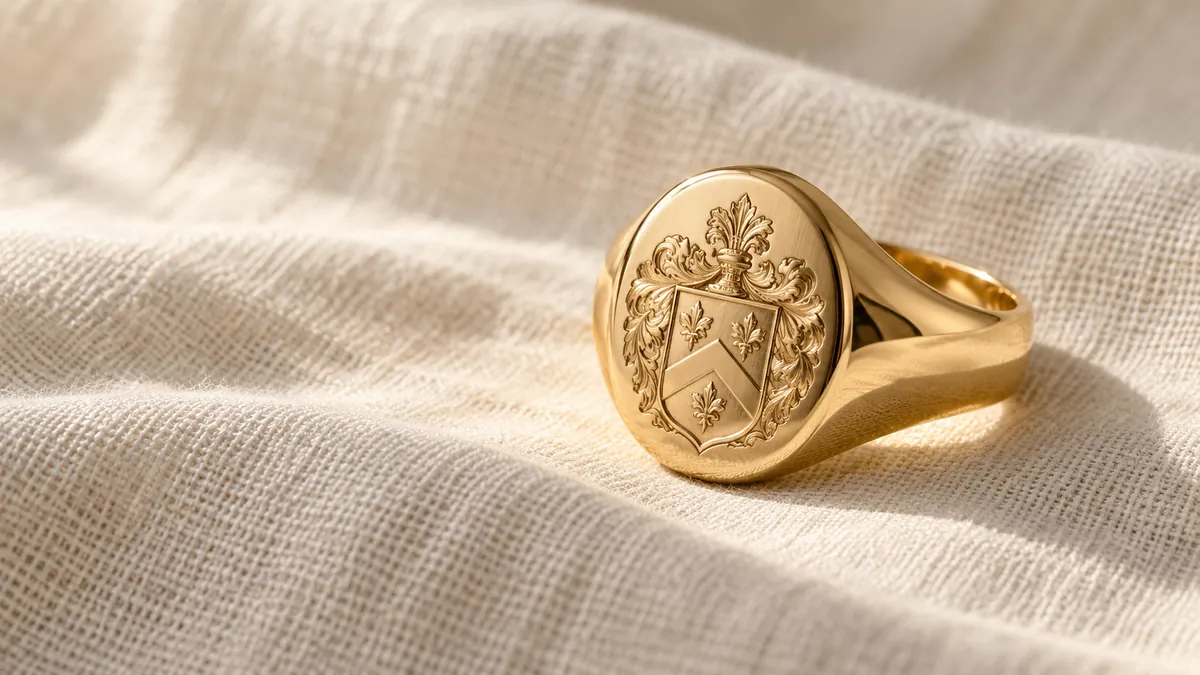
One point worth stating plainly: a wax seal needs the mark cut deep and in reverse. Crest faces are laser-engraved, a shallow cut that sits crisply on the surface of the gold, so a Crest signet is made to be worn, not pressed into wax. If sealing wax is what you want, the FAQ advises writing to a jeweler before you order.
Heraldry is where old convention still matters. Wikipedia notes that in the heraldic traditions of England and Scotland, an individual rather than a family had a coat of arms (Coat of arms, Wikipedia). The Crest FAQ puts it simply: a coat of arms belongs to a person, not to a surname. Before you engrave arms on a ring, make sure they are really yours. A monogram, or an emblem that is entirely your own, is a good alternative.
How to Choose the Right Finger
Start with how you use your hands, then look at what else you wear, then think about the proportions of the ring itself. Each finger has its own trade-offs.
The Pinky
The pinky of the hand you don't write with is the classic choice and the one most associated with signet rings. It keeps the ring away from the hand that does the writing, typing and gripping. The pinky is also the narrowest finger, so a wide or tall face covers a good part of it. Measure it separately from your ring finger, because the two can be different sizes.
The Ring Finger
The ring finger of the hand you don't write with is the other traditional option, and it is a sturdy finger for a larger face. The complication is the wedding band. In the United States a wedding band usually sits on the left ring finger, so a right-handed person who wears one will probably put the signet elsewhere. Wearing the signet on the right ring finger, or on a pinky, are both common ways around that.
The Index Finger
Many people now wear a signet on the index finger, as the Crest FAQ points out. It puts the face in plain view, which suits an engraved crest or monogram you want noticed. It is also a very active finger, used for pointing, gripping and pressing keys, so expect the ring to move around more than on the pinky.
The Hand You Write With
Nothing forbids it, and some people like it because they see the ring more often. It will meet desks, keyboards and tools more than the other hand does. Gold is strong but softer than many things it touches, so the Crest care guide suggests taking the ring off for the gym, heavy lifting, gardening and work with tools.
Signet Shapes and Finger Choice
The shape of the face affects how a ring sits. An oval runs along the finger, while a square or cushion face fills more of its width, which you notice most on a narrow pinky. Here is how a few Crest designs are described on the site.
The Bequest is a classic oval signet, made for a crest. The Bastion is a hexagon signet, made for an emblem. The Abbey is a soft square signet, and The Accord is a square one.
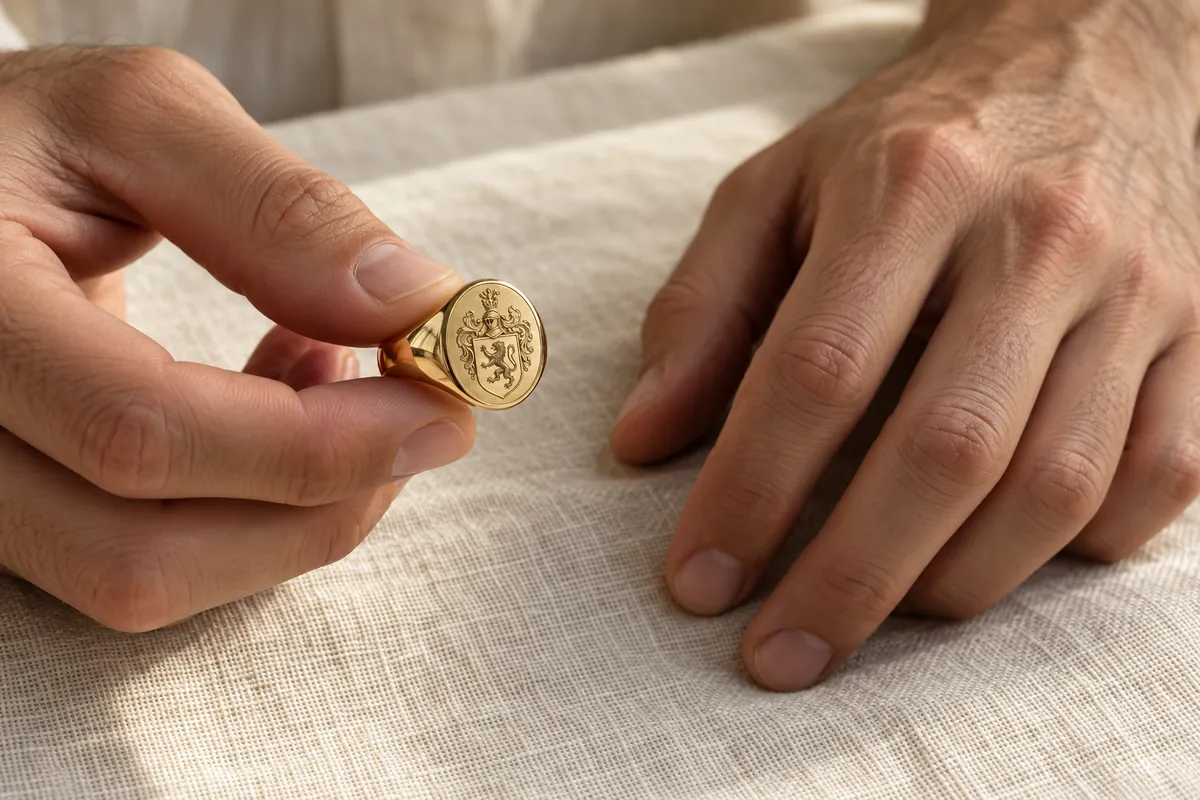
The Banner is a rounded shield, The Bower is a cushion shape, and The Bloom is a flower-shaped signet. For a warmer tone, the rose gold range takes its pink warmth from copper, and it works on any finger. You can compare every shape side by side in the full signet rings range.
As a general guide, a larger face has room for a detailed crest, and a smaller face sits quietly beside other jewelry. Choose by the mark you want to wear and the finger you have in mind, not by tradition alone.
What to Settle Before You Order
Fit comes first, because a signet has a heavier head than a plain band and tends to rotate if the band is loose. The Crest FAQ gives a simple method: measure the finger you will wear it on at the end of the day, when your hands are warm, and remember that a signet sits best a little snug. If you are between sizes, choose the larger.
Crest sizes run from US 5 to US 13.5, and the FAQ includes a conversion table for UK and Australian sizes. A plastic or metal ring sizer, described in Wikipedia's article on ring size, makes it easy to measure at home. Measure the exact finger you plan to use, since a pinky and a ring finger on the same hand can need different sizes.
Every Crest ring is made to order, and nothing is cast until you approve your proof. After you approve it, the ring is made for you alone and is final sale. That covers the size too, so decide on the finger before you approve. The FAQ walks through the proof and approval steps, and you can write to a jeweler with any question before you order.
Each ring also has its own number, laser-engraved inside the band, with a matching entry in the Register. A signet is meant to be worn for years and handed on, so pick a finger you will be happy with for a long time.
Practical Tips for Wearing a Signet
Test the placement before you decide. Wear a ring of similar weight, or a ring sizer, on each finger you are considering for a normal day. You will quickly see whether it catches on pockets, rubs the finger next to it or clashes with a watch strap.
Fit the ring to the finger first. A ring that is loose enough to spin can turn the face sideways without you noticing, which defeats the point of a visible mark. A gentle twist test helps: the band should resist a half turn rather than glide around.
Put the mark where you want it seen. If the engraving is the reason you are buying, choose the finger and hand that bring it into view when you gesture or shake hands.
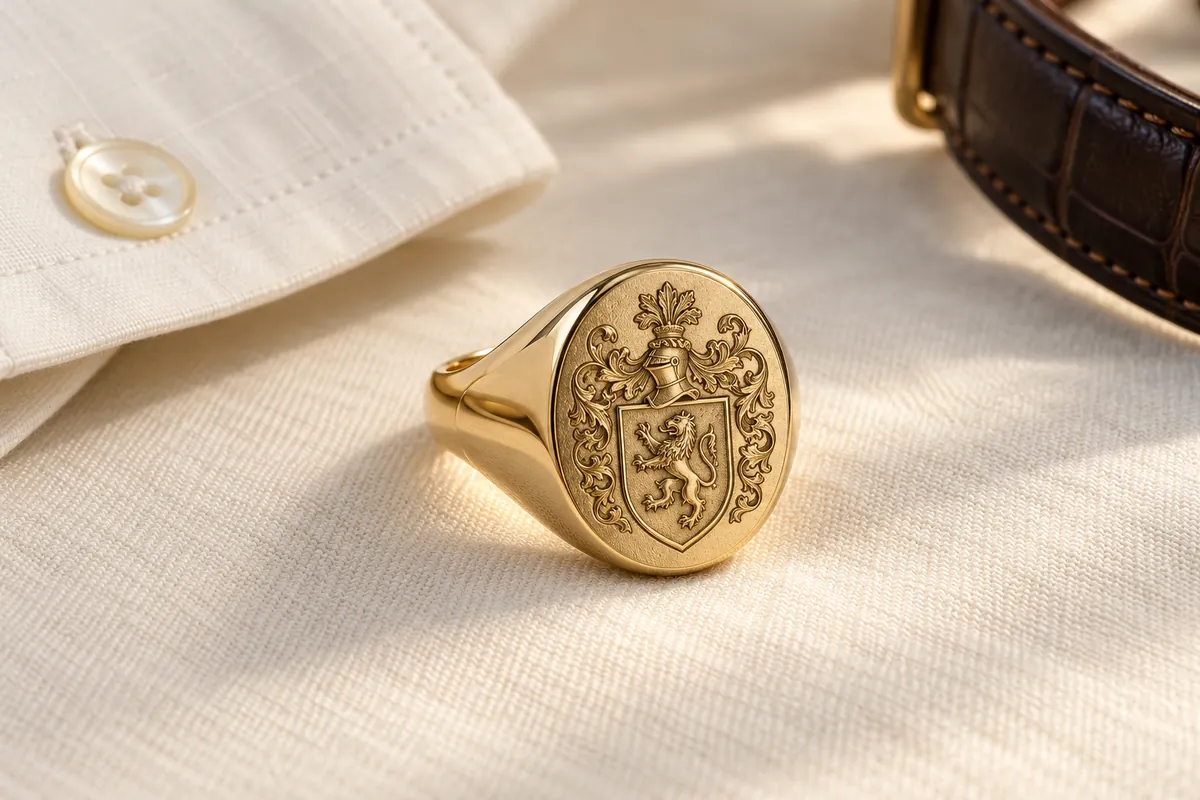
Look after the engraving. Laser engraving is crisp but shallow, so the care guide recommends brushing the face clean with a very soft toothbrush instead of buffing it, and asking any jeweler to keep polish away from the face. Keep the ring on its own in its box or a soft pouch, because gold scratches gold.
Frequently Asked Questions
Which finger is traditional for a signet ring?
The little finger, or pinky, of the hand you don't write with. The ring finger of that hand is the other traditional option. Many people now wear a signet on the index finger too, and any finger is right if the ring fits and feels natural there.
Which hand does a signet ring go on?
Tradition says the hand you write with least, so the left hand for a right-handed person. That is a tradition rather than a rule. Choose the hand that keeps the ring comfortable and clear of everyday tasks, and size it for the exact finger you will use.
Can I wear a signet ring with a wedding band?
Yes. A wedding band usually sits on the left ring finger, so many people put the signet on a pinky or on the other hand. Try the combinations with both rings on, so you can see how they sit together and whether either rubs.
How do I size a signet ring for my pinky?
Measure the pinky itself, not your ring finger, at the end of the day when your hands are warm. A signet sits best a little snug, and if you are between sizes the Crest FAQ advises choosing the larger one. A ring sizer helps you measure at home.
Can I change the finger after I order?
Decide before you approve your proof. Every Crest ring is made to your size, and once you approve the proof it is final sale, including the size. Measure the exact finger you plan to wear it on, and read the FAQ for the detail.
References & Sources
Every signet is made to order, and nothing is cast until you approve your proof.
See the signet rings